
High Acid, Wide River
In Rheinhessen and Mosel a new generation of German wine makers are finding a powerful new voice


Words and photography by Nicolas Payne-Baader
Descending into Hahn airport gives you the slightly uneasy feeling that you’re about to land directly on top of a cow. This rural landing strip, nominally a Frankfurt airport despite being an hour and a half drive away, is plonked a stone’s throw from two of Germany’s most important and exciting wine regions: Rheinehessen and Mosel. These are two of the cultural, historical and romantic heartlands of German wine where in the mid 19th century wines made here were the most expensive and sought after in Europe. Despite decades or even centuries being more sought after than the Grand Crus of Burgundy, the ease away from the sweeter styles of wine that this part of Germany is known for has left these regions as a fairly niche choice, finding their feet in a new landscape. Today it feels like a hot house, starting to nurture a new generation of winemakers working with organic and low intervention methods in a time where the entire concept of natural wine feels in flux.
Since the end of Covid natural wine has struggled to renew its identity, the overhyping of the market has constantly risked a craft beer style boom and bust, ‘natty’ wines risked being overwhelmed by their own stereotypes. Consumer tastes have also changed, the average wine drinker has less tolerance for faulty wines especially with the inflation of wine prices felt most keenly in a post-Brexit Britain. Instead people look towards real wines that are defined by location, well farmed, without industrial yeast and keeping to reasonably small amounts of sulphur.
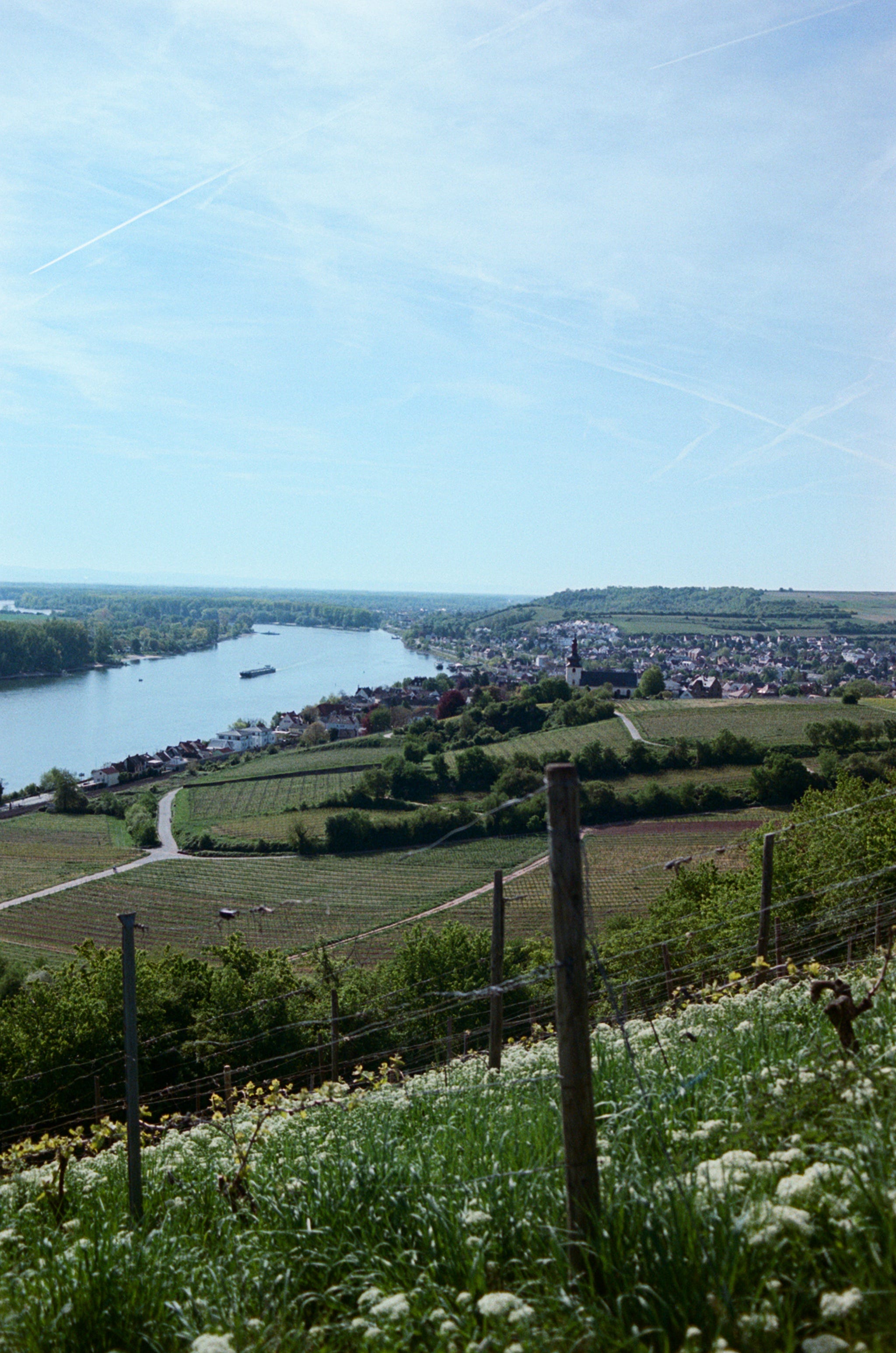
Mosel and Rheinhessen are as appropriate a place as any to discuss this flux in the market; the rich history remains and local riesling, especially in Mosel, still carries significant weight even as the pervading style has shifted from off dry to bone dry. The work here isn’t easy, the vineyards are some of the steepest in the world meaning high labour costs and often low yields.
Weingut Melsheimer is a perfect example. Their vineyards are not for the fainthearted, the slopes rise up almost vertically from the wide river with almost no topsoil. We arrive on an unseasonably warm day and ascend by zigzagging through the vines that are all held up by individual wooden poles rather than trellises to better balance the steepness. Two shy goats gambole around the top, occasionally sticking their heads over the cliff to look suspiciously for visitors.
We’re led by Jannis Melsheimer, the young, ambitious and sharply dressed wine maker who’s never more than a few minutes away from a witty quip or probing question and who’s slowly taking over the family business from his father. We make it up to a small hut that sits perched at the summit, originally built as a spot for vineyard workers to take lunch. As we near the top, dewy faced and a little out of breath he quickly deflates any sense of achievement we might have taken from the strenuous walk. “I found my 87 year old uncle up here this morning,” he says with a wide smile as he begins to uncork bottles of riesling.
It’s hard to resist the romantic pull of the Mosel and its people. “You can always tell the German winemakers from the French,” Jannis tells me with a glint in his eye. “The French winemakers will always start by talking all about the terroir, the grapes, how much they love these things. The German winemakers will get up and the first thing they say is always how much they love their wives, how important they are and how they could never make wine without them!” This is, afterall, the region of winding rivers and fairytale castles, the Melsheimer home is set in a village so picturesque that you half expect Little Red Riding Hood to appear round the corner and ask if you fancy a spritz.

During an absurdly picturesque tasting we start to see a picture of what Jannis (pictured below) is doing with a vineyard which has been in the family for over 200 years. Jannis’ father Thorsten first converted the family vineyard to biodynamic in the 1990’s, eschewing insecticide, introducing more cover crop and working with less intervention in the cellar. Jannis is continuing and evolving that approach. 2024 was the first year he had started to take over the picking, now using two baskets, dividing the grapes which might have botritis, also known as noble rot, a fungus that occurs naturally and fairly often in this part of Germany. Botritis adds the sweetness that is sought after especially when making sweet wines like sauternes. Whilst not a fault Jannis is very mindful of the flavour. “When the wine’s older than 20 years it gives it a layer that covers the purity,” he explains. “In sweet wines I think it can be amazing but in dry wines I want no more than 2 or 3 percent of botritis in the material. Also when it’s longer on the lees this influence is stronger, vintages for 3 years or more I’m not always so happy.” Stylistically Melsheimer’s wines are evolving but not revolutionising, you can feel a tendency towards reductiveness, especially in the hottest vintages like 2022 where days frequently hit 35 degrees, giving the wine a distinctly smokey edge. The wines throughout balance a new approach and the traditional style, they are unmistakably German Riesling but have a complexity and depth of flavour not always associated with the grape and region.
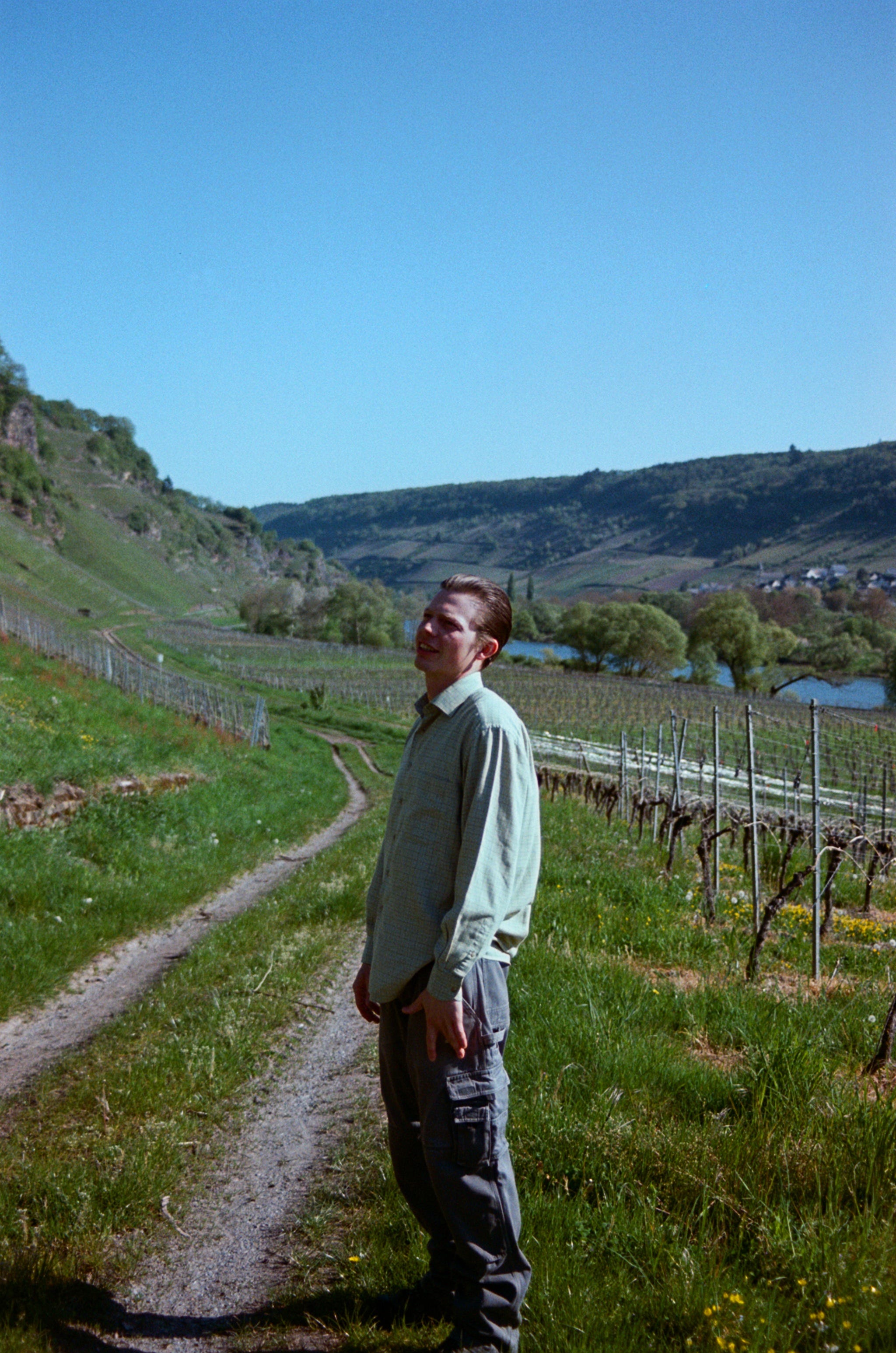
Next year Jannis will introduce spatburgunder, the German name for pinot noir. During the third reich all grapes apart from riesling were banned in the Mosel but before that there was a tradition of great lighter reds. There’s a sense that Jannis is reaching towards a truly traditional, pre-industrial farming model to bring a real and lasting sense of what Mosel wines should taste like.
Heading East by about an hour, past the charming city of Mainz is Rheinhessen where two young winemakers in Moritz Kissinger and Carsten Saalwachter are starting to redefine this neighbouring region. Rheinhessen is known as the workhorse of German wine, producing a little over a quarter of the country’s wine by volume including the most and least expensive. Here organic and biodynamic vineyards often sit side by side with conventionally farmed plots, hand harvesting next to combine harvester. It’s also here that the young vigneron Carsten Saalwachter has started creating some of Germany’s most sought after cuvees.
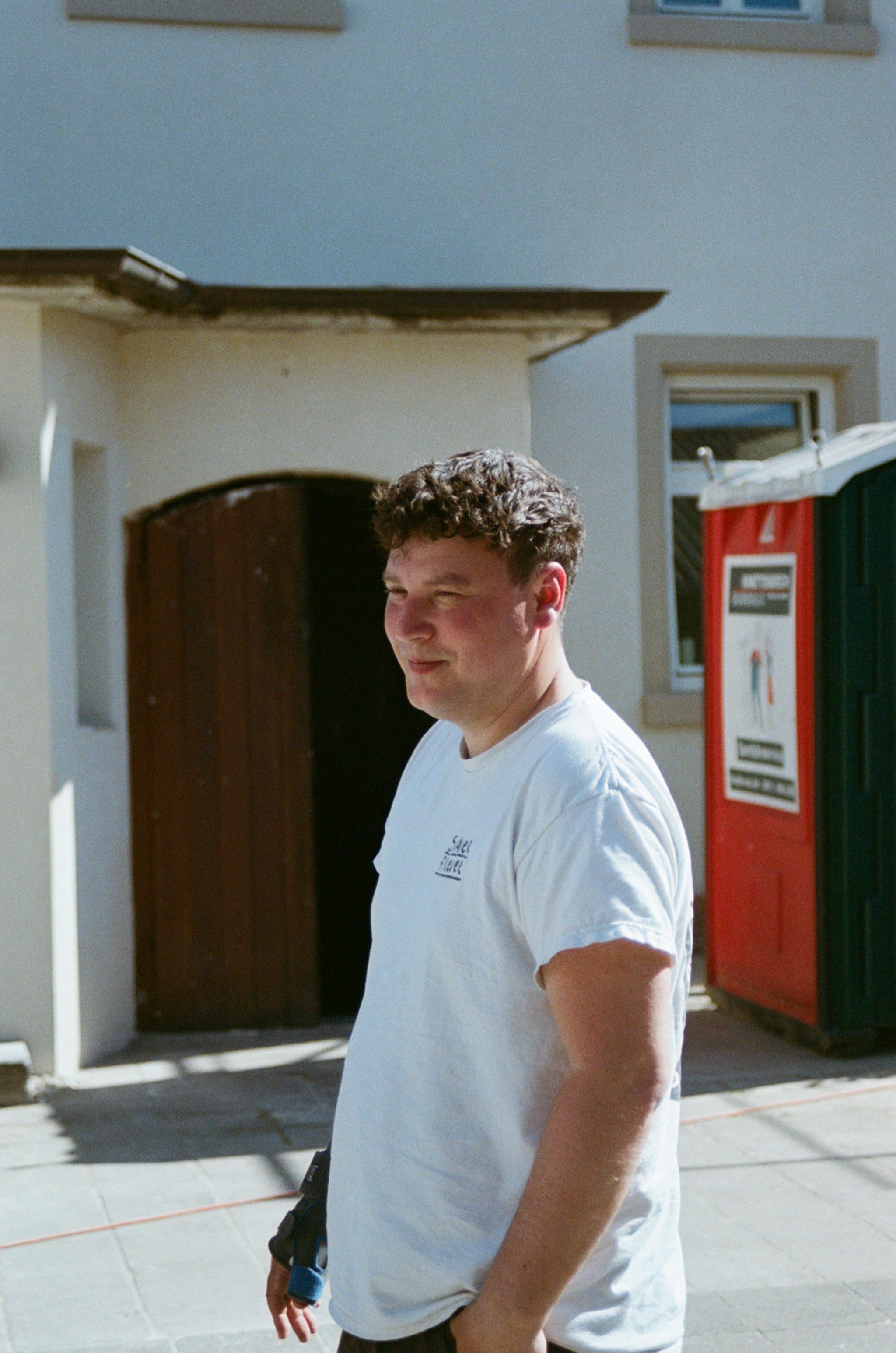
Arriving at his winery, tucked away in a nondescript small town, Carsten (pictured above) greets us with a sheepish smile, his hand bandaged up after a scuffle with a jammed lawnmower blade. Having made his first cuvee in 2018 his star has risen extraordinarily quickly.
His yard is strewn with machinery, empty bottles and equipment, a handful of helpers, friends and apprentices waft through the space, looking as likely to start cleaning down the barrels as to invite you to their trance rave. Despite his youthful appearance and the slightly pirate ship energy to his winery Carsten’s wines are incredibly developed and his vision is remarkably clear.
“If you talk about German history there were two grape varieties: riesling and silvaner,” he explains. “When I think about my grandfather he was always with a bottle of silvaner, a litre of course, but when he grew it, it was much more for volume.” Silvaner has been grown here for over 800 years but the area is generally known for more Bungundian grapes like weißburgunder (pinot blanc) and chardonnay. When he started in the vineyards Carsten thought it was important to keep the traditional grape alive. “I started by making silvaner as the entry level, just the whatever wine,” he explains, “and then year on year I realised, fuck, the best barrels are the shitty silvaner!” Today his most and least expensive wines are from Silvaner and it forms much of the thesis around terroir and style. “If you want to grow you can do that with chardonnay,” he says, swirling his glass with surprising dexterity considering his bandaged hand, “but if you want to make a market, and you want to do it with a DNA and take the region with you then you need to focus.”
The wines are completely atypical to silvaner which tends towards light and refreshing in style but, perhaps unfairly, thought to lack complexity. Carsten bucks that trend, each stays in barrel for eighteen months, two winters and one summer, there’s no fining and as minimal a quantity of sulphur as is possible. The result is a wine with fresh, herbal notes, savoury and with an unexaggerated reduction which recalls the heights of Burgundy.
We make the swift driver over to another young and exciting wine maker: Moritz Kissinger. He’s just moved into a new home which will become his winery, slightly away from his family’s original vineyards. The house combines an usual mix of stark industrial qualities with beautiful detailing, guarded by intricate wrought iron gates depicting grapevines. “It makes me sad sometimes when you look at a lot of new buildings, they’re so plain,” Moritz explains as we walk up to his vineyards, gazing down into the wide Rhine Valley. “You see old places and the ceiling is considered, little tasteful decorations, not baroque but really something thoughtful, to keep you entertained.” It’s a philosophy that applies almost as well to his wine as his taste in architecture. Moritz alongside his wife Jasmin are now crafting incredibly precise but joyful and often surprising wines, paying homage to the traditional styles but building on them, flexing within the confines of what’s considered typical for the area.
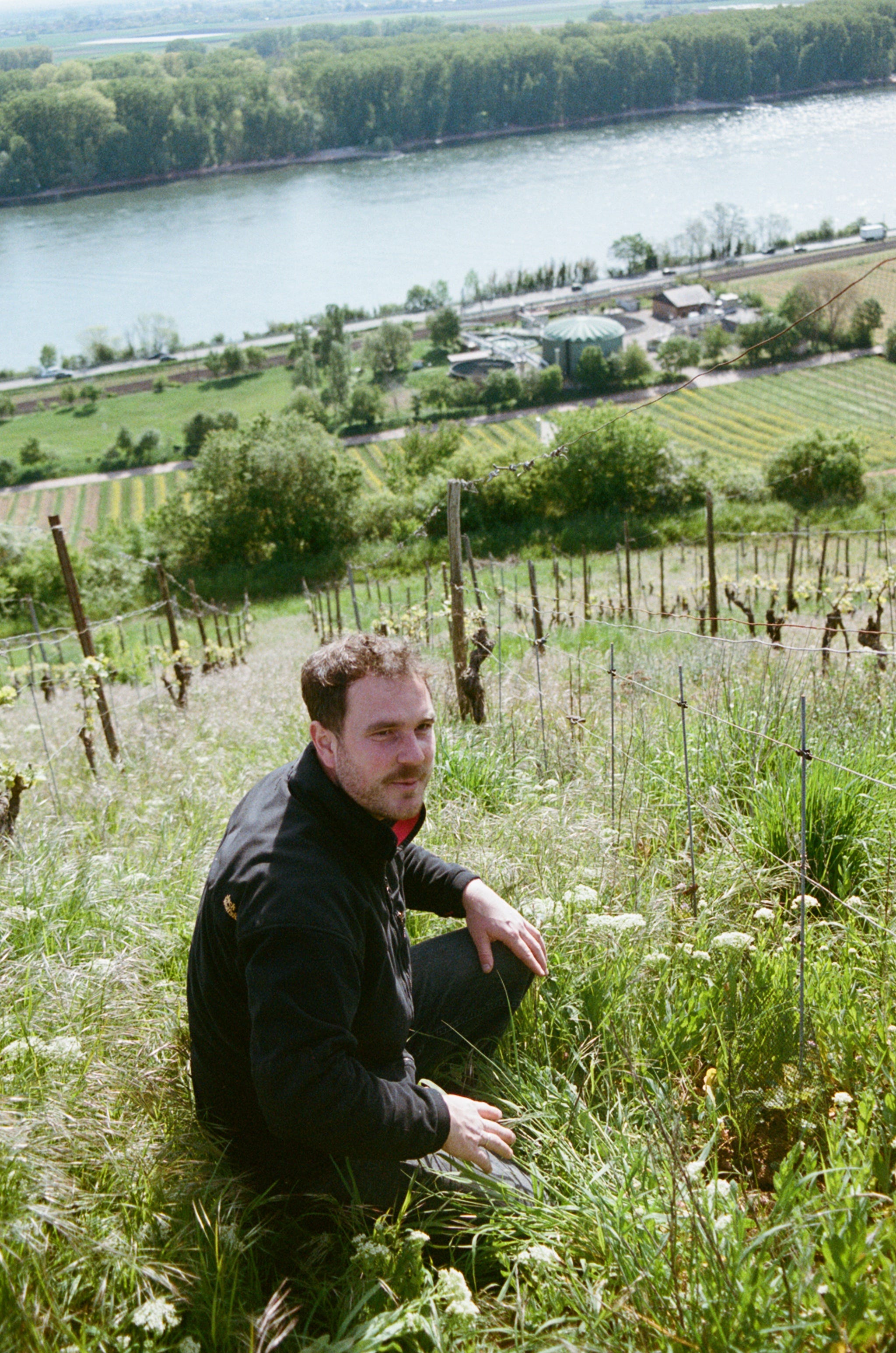
“Here the river really defines the wines,” Moritz Kissinger (pictured above) informs me as we walk through the steep vineyards of Rheinhessen, the valley laid out before us, lazy in the spring sunshine. “The wind comes through the valley and cools everything so even on the hottest years the wines maintain a freshness.” The river has also defined the geology of the area, something Moritz and Jasmin delve into with their wines, crafting single plot expressions often from tiny but unique plots, sometimes only a few rows wide. These wines tell an incredible story of the subtleties found in the area moving from red clay through limestone each created with an infectious excitement that emanates from the couple.
German wine can be a confusing proposition to a consumer better versed in French classifications of Grand Crus, Villages etc. Traditionally German wine was always ranked in order of sweetness, a system that’s become almost entirely redundant. Until recently German wine has been mainly known internationally through the Verband Deutscher Prädikatsweingüter (VDP) a relatively exclusive club of around two hundred winemakers who have tended to embrace a more technical and controlled approach to winemaking. Anyone wishing to join must be invited and pay an annual fee. In return they get to have the insignia of the VDP, the stylised German eagle above a bunch of grapes, on their bottles and are included in more organised tastings and generally accepted into the upper echelons of Germany’s wine.
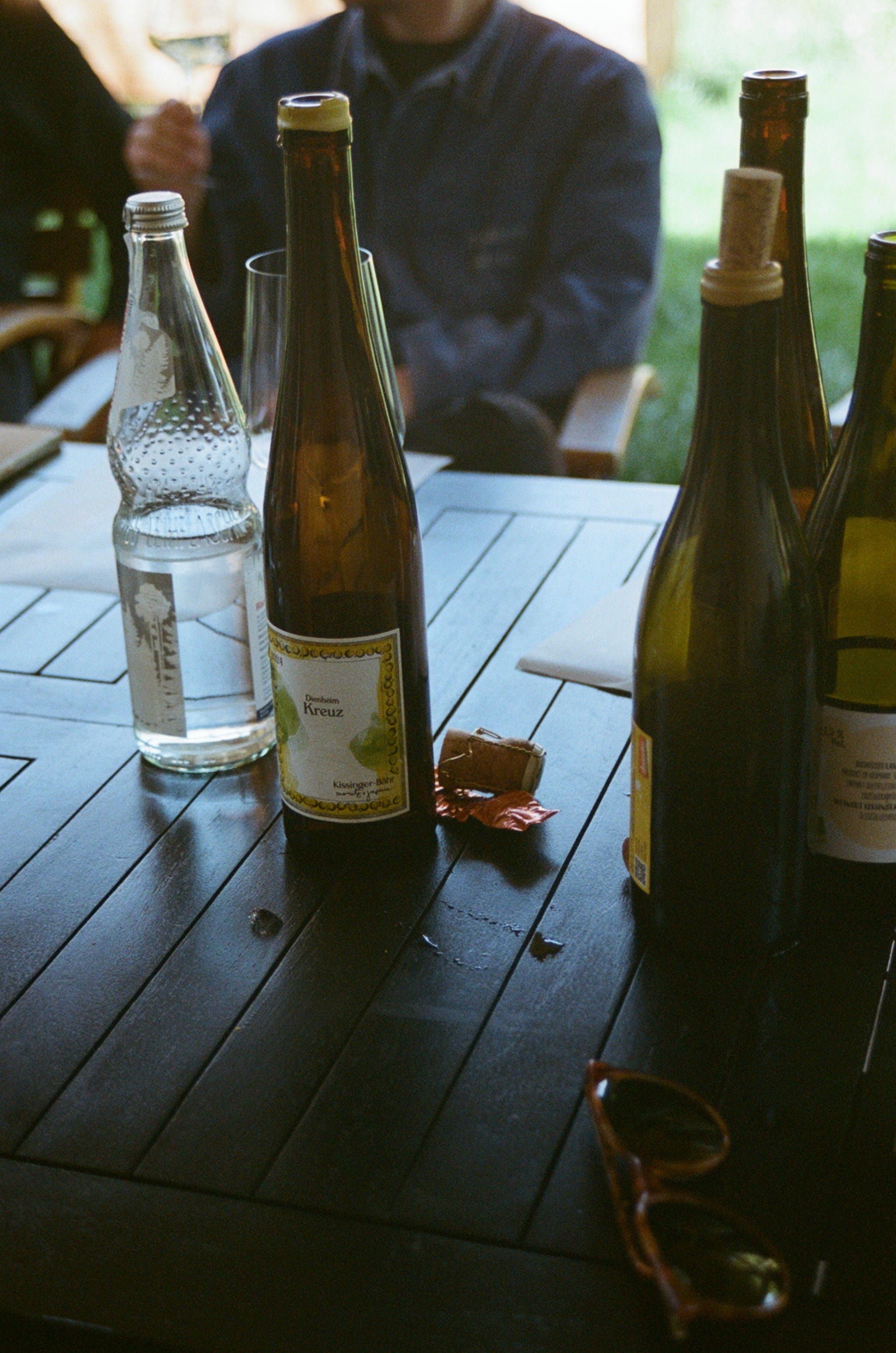
German wine is also mainly ruled over by the Verband Deutscher Prädikatsweingüter (VDP), a relatively exclusive club of around two hundred winemakers who have tended not to embrace natural winemaking. Anyone wishing to join must be invited and pay an annual fee. In return they get to have the insignia of the VDP, the stylised German eagle above a bunch of grapes, on their bottles and are included in more organised tastings and generally accepted into the upper echelons of Germany’s wine.
The board was originally set up as ‘Verband Deutscher Naturweinversteigerer’ to maintain standards and to police wineries that used chaptalization: the process of adding sugar into unfermented grape juice to increase the final alcohol content and giving wines more oomph. It was a practice deemed counter to ‘natural’ wine making as defined in 1910 but today is relatively uncontroversial and is a common practice for cooler climates including famed wines of Burgundy and is no longer deemed a deciding factory in being accepted into the VDP.
The question from younger, more low intervention wine makers is whether they fit with the philosophy of a big wine board like the VDP or whether the VDP will change to fit them. Whilst the intention of the board was always positive and aimed to maintain quality they have faced the same kind of issues as similar bodies in the rest of Europe: can the broadness and dynamism of new winemaking fit into systems which are often bogged down by rules, regulations and politics?
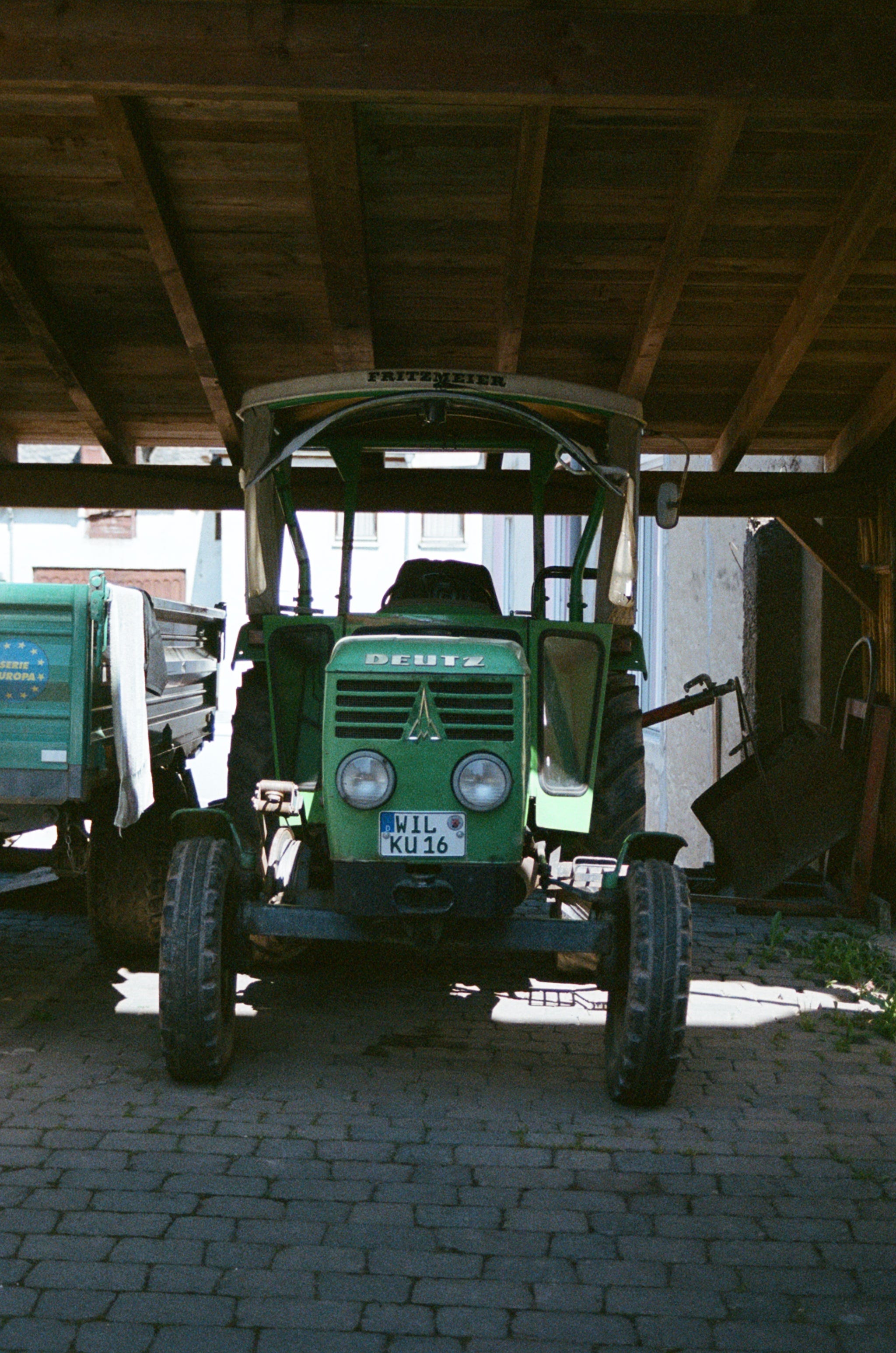
Whilst in Germany we visit Karakterre,one of Europe’s most dynamic wine fairs which exhibits in Burgenland and New York and, for the first time, in Germany. The fair is held at Kloster Eberbach, a beautiful medieval abbey in the Rheingau, outside of Mainz where the monks have been making wine for at least 800 years. The grounds are enormously peaceful in the spring sunshine as we walk between the imposing spires and soaring vaulted ceilings. Inside the main hall around 60, mainly German, winemakers are divvying out tastings of their cuvees, all low-intervention, organic and Biodynamic wines. It’s an impressive snapshot of a thriving industry, making wines that would have felt countercultural twenty years ago but using methods that would have been familiar to the Cistercian monks that first called this monastery home.
There’s a sense that these winemakers are no longer the anarchists that they may have been presented as a decade or two ago, natural wine does not have to be the culture war that some make it. Markus Altenburger, a winemaker from Burgenland in Austria who has come with us to see Kissinger with us puts it fairly succinctly: “even if it takes a lot of energy we should try and change things,” he explains. “The thing that takes nobody further is pointing fingers at each other, boards like the VDP can profit a lot from more progressive voices, they need this, the interaction between establishment and progressive forces needs to be set in motion. Only together can we manage this.” Looking down the rows of winemarkers, a new local generation in a hall of what might have been the first, it’s a confluence that seems more natural now than ever.
All Wines in this article are available from Newcomer Wines who have also launched a new membership program.
The membership costs £95 per month and includes three bottles of wine plus other membership bonuses like 15% off all wine bought online and a free weekly glass of wine at the Newcomer Bar in Dalston.
The July membership box also includes a bottle from Melsheimer’s Kabinett Riesling.